The short version
On the Our Future is Kind Podcast, generational futurist Ryan Vet tells host Michael G. Neece that sticking a label on a generation is probably one of the most unkind things you can do, and offers the Generational Prism in its place: age on one face of the pyramid, the moment in history on the other, the label only what refracts out the bottom. He runs the job-hopping numbers live on air, names the velocity gap where technology outruns our ability to decide what is right, and argues AI is a hammer that can help you build a house but will never give you shelter. His kindest path forward is smaller than legislation: put the phone down, learn the name, look the person in the eye.
Ryan Vet · Video on Our Future is Kind Podcast
Michael G. Neece ends every episode with a kindness challenge, so he spends this one looking for the kind thing to do about generational conflict. Ryan Vet's answer starts by taking something away. Labeling a generation, he says, is probably one of the most unkind things you can do — and it is exactly what society does to Gen Z, to Gen Alpha, and now to Gen Beta, born from 2026 on.
What replaces the label is the Generational Prism, and Ryan makes Michael prove it on air. How many times had baby boomers changed jobs by age 25? Michael guesses once or none. The real answer reframes the whole stereotype. From there the conversation moves to AI as a hammer, the velocity gap between what technology can do and what we have decided it should do, and a future test Michael poses as a thought experiment: it is 2126, the doors open, and you have to know at a glance whether we got it right.
Ryan's Big Takeaways
- 01
Labeling a generation is one of the unkindest things you can do.
This is the moral spine of the episode, and Ryan puts it in the show's own terms. Society fixates on what makes each cohort different, then sticks a label on it — Gen Z, Gen Alpha, now Gen Beta arriving in 2026 — and the label becomes the whole person. Michael pushes back honestly: talking to his father in his eighties is genuinely a different conversation than talking to his teenage daughters, and pretending otherwise helps nobody. Ryan agrees, and says that is why he uses a prism rather than a label. Two faces of a pyramid, age on one and the moment in history on the other, and the label is only the base — what refracts out when light passes through. The label is an output, never an identity, and the danger of Gen Z specifically is that the cohort has split so hard internally that two Gen Zers can be complete opposites of one another.
The Generational Prism → - 02
The job-hopping stereotype dies live on air.
Ryan turns the prism into a quiz and lets Michael answer cold. How many times had baby boomers changed jobs by age 25? Michael says once or none. Gen X? Maybe two. Millennials, the generation everyone calls job hoppers? He starts to doubt himself and says seven. The Bureau of Labor Statistics answer is 5.3 for boomers, 5.3 for Gen X, and 5.6 for millennials. Michael's reaction — "that's blown my mind" — is the point of the exercise. The gap people think they see is the moment, not the person. Boomers took their first job around 10 or 11 before child labor laws, so they spread 5.3 changes across fifteen years. Millennials averaged 19, after graduation rates pushed first jobs to somewhere between 16 and 22, and compressed the same number into a handful of years.
The Generational Prism → - 03
AI is a hammer, and a hammer does not give you shelter.
Ryan does not hedge on what AI will do: it is already replacing jobs, already eliminating entry-level roles, and he will not pretend otherwise. He also will not pretend that is new. In 1967 a Senate subcommittee heard that computers would deliver a 22-hour work week and retirement by 38, and Ryan argues the prediction was not entirely wrong — the output arrived exactly as promised, and computers also invented software developers, CompUSA, and Circuit City along the way. The frame he wants leaders to hold is older than any of it. A hammer is great, because it can help you build a house. But a hammer itself does not give you shelter. The failure mode he names is precise: if you program a machine so thoroughly that you are more responsive to its output than to your own input, the machine is winning.
Cognitive Erosion → - 04
The velocity gap is technology outrunning morality.
This is Ryan's term for the space between what technology can already do and how long it takes society to decide what it should do. His worked example is the phone. The harm showed up around 2012, the research followed — he points to Jonathan Haidt's The Anxious Generation — and meaningful United States legislation is only arriving now, more than a decade later, well after Australia and Indonesia moved. The question he leaves with Michael is whether AI gets the same lag. He is not waiting to find out: he says leaders should not sit around for Capitol Hill or the platform companies, and he points at MIT research published roughly a year after ChatGPT went mainstream, showing brain scans of heavy AI users that he calls frightening — with no longitudinal data yet behind them.
The Velocity Gap → - 05
Removing friction removes the moments where kindness happens.
Ryan reaches back to the 1950s and '60s appliance ads — a mother in a plaid apron beside a new dishwasher, over a line about spending more time with your kids. Did any mother actually spend more time with her kids because of the dishwasher? Probably not. He calls that the pattern we have repeated ever since: we chase a better life by eliminating friction, and in removing the friction we remove the very human interactions where kindness was possible. His prescription is to choose, deliberately, which tasks to add friction back into. Handwriting is his example — the pen hovering over the paper while you decide between two words is the thinking, and typing skips it. He extends the same logic to safety culture, where a real but rare danger produced an overcorrection that stopped kids from so much as looking at a stranger.
The Friction Doctrine → - 06
Gen Z's two words are authenticity and boundaries.
Asked to compress a generation into two words, Ryan gives Michael authenticity and boundaries, and traces both through the Generational Pendulum — experience, challenge, overcorrect, recalibrate. The Silent Generation was loyal to company, country, and family. Boomers were loyal to the title and the paycheck. Gen X, the latchkey kids who came home to empty houses, coined work-life balance and then overcorrected into helicopter parenting. Millennials wanted the filtered, experiential Instagram life. Gen Z is the recalibration, which is why the friction is so high right now: they will quiet quit, take a mental health day, or accept a job and never show up on day one. Ryan is careful not to call any of that inherently wrong, and thinks the pressure it puts on employers may swing the pendulum back toward treating people as people who also have families.
The Generational Pendulum → - 07
Hire for character and culture, then lead people instead of managing them.
Michael asks the practical question — you have done the work, you know the stereotypes are wrong, so how do you actually hire? Ryan's answer is that leadership has quietly drifted into management, and the two have the wrong objects. We should be managing tasks and leading people; instead we manage people, because we do not like the behavior we are seeing. He borrows the parenting parallel: some parents manage behavior, others lead the child by explaining why we do or do not do the thing. Hire for culture fit, alignment with the values, belief in the mission, and above all character — integrity and honesty. Get those right, he says, and you can overcome most of the generational friction. Not all of it: he puts the annual cost of poor communication in the United States workforce at $1.2 trillion.
Respect →
The Story Ryan Told
Michael asks Ryan to step into a time machine, travel a hundred years forward, and say what he would look for the moment the doors opened in 2126 to know that we had done the right things. Ryan admits his first instinct is the wrong one. Wall-E is a favorite in his house — his kids get very little screen time and have seen only a handful of movies total — and he fears that is where we are headed, everyone glued to a screen, rolling around.
So he answers with something much smaller. His family has a car wash subscription down the road, bought only because the first month was free. He tells his kids to smile and wave at anyone helping or serving them, and to say thank you. Now they say it from the back seat and wave at the person watching the car through a closed window. The staff started looking for his car. They have brought gifts for his kids. He cannot cancel the subscription now, because his kids love seeing them and they love seeing his kids.
His other example is sending a six-year-old up to order their own food while the waiter visibly wonders whether the kid can pull it off. Yes, Ryan says. They can. Address people by name if they give you one. Look them in the eyes. If we can get that back, he tells Michael, it would be an incredibly kind future.
Standout Quotes
Labeling these generations is probably one of the most unkind things you can do.
A hammer is great because it can help you build a house, but a hammer itself does not give you shelter.
The velocity gap is when technology has surpassed morality.
If you start programming a machine so much that you're more responsive to its output than to your input, that's a massive problem. The machine's winning.
We have sought as humankind to eliminate friction because we want a better life, and often in removing friction we remove the very human interactions where we can be kind.
At the end of the day, you can't rely on technology. You've got to rely on other humans.
If I could ever give Gen Z two words, it'd be authenticity and boundaries.
Every single person you have an interaction with is precious.
Drag, swipe, or use the arrows to explore
Frequently Asked Questions
Why does Ryan Vet say labeling a generation is unkind?
Because the label collapses a person into a stereotype and then justifies treating them by it. Ryan argues society fixates on what makes each cohort different, sticks a label on the difference, and lets the label stand in for the human being. His replacement is the Generational Prism: age on one face of the pyramid, the moment in history on the other, and the label only what refracts out the bottom. He is explicit that he cannot throw labels out entirely, since his research depends on cohorts, but the label has to stay an output rather than an identity. Gen Z is his cautionary case, because the cohort has split so far internally that two Gen Zers can be complete opposites.
Do millennials really change jobs more than boomers or Gen X?
Barely. By age 25, baby boomers had changed jobs 5.3 times, Gen X 5.3 times, and millennials 5.6 times, per the Bureau of Labor Statistics. The stereotype survives because people compare the counts without comparing the windows. Boomers started working around 10 or 11, before child labor laws, and spread those 5.3 changes across roughly fifteen years. Millennials started at an average of 19, with first jobs landing somewhere between 16 and 22, and compressed the same number of changes into a handful of years. Same total, very different density.
What is the velocity gap?
The velocity gap is Ryan Vet's term for what happens when technology advances faster than our ability to work out what is right or wrong about it. His example is the smartphone: the harm to teenagers became visible around 2012, the research followed — he cites Jonathan Haidt's The Anxious Generation — and meaningful United States legislation is only arriving now, more than a decade later, after Australia and Indonesia had already acted. His question for leaders is whether AI will run the same lag, and his answer is not to wait for Capitol Hill or the platform companies to close it.
How does Ryan Vet think leaders should use AI?
As a hammer. A hammer can help you build a house, but a hammer itself does not give you shelter. He is direct that AI is already replacing jobs and eliminating entry-level roles, and equally direct that every major innovation has done this — computers replaced work and then invented software developers, CompUSA, and Circuit City. The failure he warns against is becoming more responsive to the machine's output than to your own input, at which point the machine is winning. His practical advice is to teach critical thinking first, because someone who can think can learn to prompt in an afternoon, while someone trained only to prompt has nothing underneath it.
What are the numbers on family dinner across generations?
Ryan cites the Institute for Family Studies data here from memory and lands slightly off. On air he says 89 percent of the Silent Generation ate dinner together as families, falling to 33 percent for Gen Z. The published figures are 84 percent for the Silent Generation, 76 percent for baby boomers, 59 percent for Gen X, 46 percent for millennials, and 38 percent for Gen Z — a 46-point collapse across four generations. The shape of his argument holds and the collapse is real; the two endpoints he quotes are each about five points off. The paired statistic he gives is well supported: young adults now spend roughly two more hours a day at home than the previous generation did, and are lonelier for it.
What is the kindest thing a leader can do, according to Ryan Vet?
Put the phone down. Asked for the single act that gets us to a kinder future, Ryan goes smaller than policy: take off the smartwatch too, remove everything that vibrates, buzzes, glows, or blinks, and give one person your undistracted attention. He pairs it with the habits he teaches his own kids — smile, wave, say thank you, learn the name, look the person in the eyes. His argument for why this is not trivial is the loneliness data: the U.S. Surgeon General declared it a national concern in 2023, and childhood loneliness, which never used to register on the charts, is now climbing through young adulthood and into middle age.
Frameworks & Ideas Referenced
- The Generational Prism : Named and demonstrated on air, with Michael answering the job-hopping quiz cold before Ryan reveals the Bureau of Labor Statistics numbers.
- The Generational Pendulum : Named directly, with all four phases walked — experience, challenge, overcorrect, recalibrate — from the Silent Generation through Gen Z.
- The Velocity Gap : Named as technology surpassing morality, using the decade-plus lag between social media harm and United States legislation as the worked example.
- Cognitive Erosion : Named when the conversation turns to AI dependence, GPS, spell check, and the MIT brain-scan research.
- The Friction Doctrine implied : Not named on air, but fully argued — the 1950s dishwasher ad, handwriting as thinking, and choosing which tasks to add friction back into.
- Childhood Surveillance implied : The safety-culture overcorrection Ryan describes, where a rare but real danger produced a childhood in which kids are not allowed to look at a stranger.
- Respect implied : His account of trained boldness and the friend syndrome — first-name coaches, doctors, and professors — as the origin of what older generations read as disrespect.
Books, People & Sources Mentioned
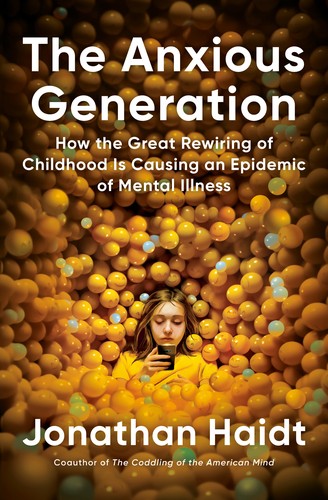
Jonathan Haidt, The Anxious Generation
Ryan's citation for the post-2012 harm to teenagers that took more than a decade to reach legislation — his central illustration of the velocity gap.
- Bureau of Labor Statistics : The source behind the job-hopping numbers Ryan quizzes Michael on — 5.3 changes by age 25 for boomers, 5.3 for Gen X, 5.6 for millennials.
- MIT Media Lab: Your Brain on ChatGPT : The brain-scan research Ryan calls frightening, published roughly a year after ChatGPT reached the mass market and well before any longitudinal data exists.
- The Lighthill Report and the AI winter : Ryan's precedent for calls to slow AI down — the 1973 report that helped trigger the first AI winter, which he raises to argue a moratorium would not hold today.
- 1967 Senate subcommittee testimony on automation : The hearing that predicted a 22-hour work week and retirement by 38. Ryan dates it to 1968 on air; the testimony is from 1967 and projected 1985.
- Harris Poll and Grammarly, The State of Business Communication : The source of the $1.2 trillion annual cost of poor communication in the United States workforce that Ryan cites when Michael asks how to hire well.
- Institute for Family Studies: the decline of the family dinner : The research behind Ryan's family-dinner collapse. The published figures are 84 percent for the Silent Generation and 38 percent for Gen Z; Ryan says 89 and 33 on air. See the FAQ below.
- U.S. Surgeon General: Our Epidemic of Loneliness and Isolation : The 2023 advisory Ryan references when describing the U-shaped loneliness curve and the new spike in childhood loneliness. Ryan's essay on loneliness →
- Michael G. Neece, In Kind: Consciously Craft a Meaningful Life and Career : The host's book on building a kinder workplace, and the project behind the podcast.
- The Collide newsletter : The free weekly Ryan points listeners to on air: roughly 1,200 to 1,800 words, about a nine-minute read, one topic and the data behind it. Read Collide →
Keep Exploring
-
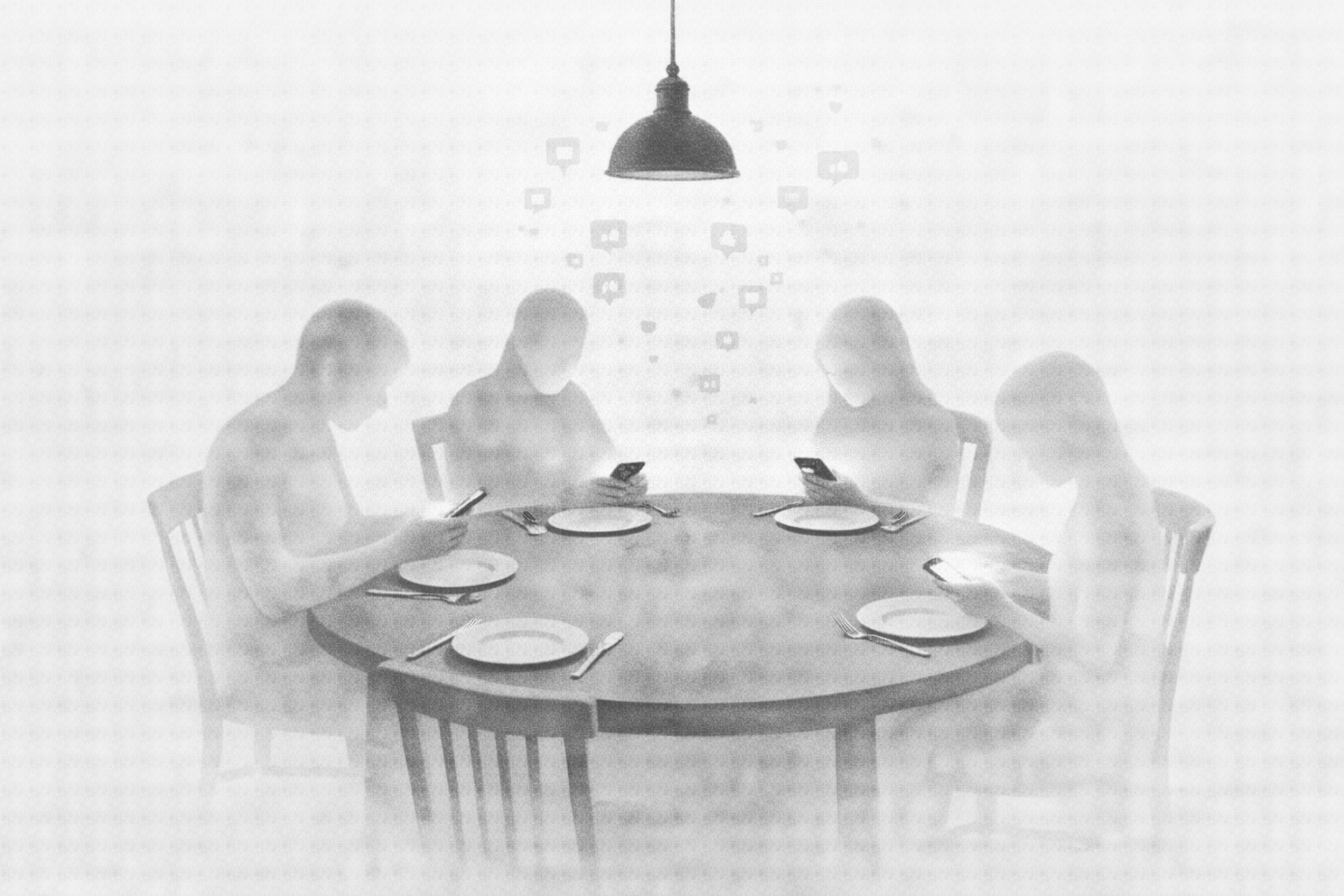 Collide essay We've never been more alone The Surgeon General says loneliness now kills like smoking 15 cigarettes a day. The youngest generation is the most at risk. Explore →
 -
 Collide essay The Velocity Gap: Gen Z's contradiction with AI When you eliminate friction, you get caught balancing moral conviction over drive. Explore →
 -
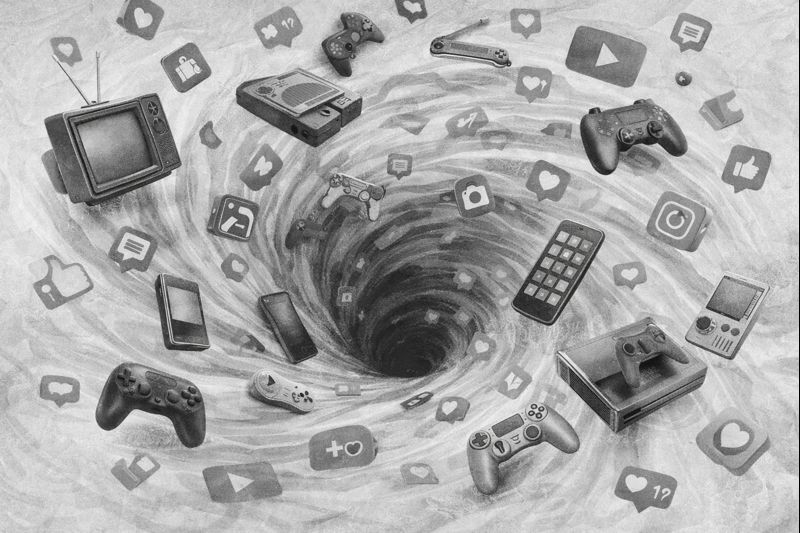 Collide essay The Cost of Waiting: how social media exposed our blind spot about AI While Australia pursues phone bans, others wait. We hesitated with smartphones and social platforms. AI won’t give us decades to recalibrate. Explore →
 -
 Collide essay When freedom became fear: how a generation lost its courage to let go Helicopter parenting didn’t appear overnight. It was built on headlines, moral panic, and a fear that safety could replace strength. Explore →
 -
 Podcast episode We've never been more alone: why the most connected generation is the loneliest in history We are the most digitally connected society in human history. We are also, by every measure, the loneliest. The U.S. Surgeon General compared loneliness to smoking 15 cigarettes a day. Explore →
 -
 Podcast episode The real barrier in cross-generational communication: why trust, not style, is what's really broken Poor communication costs U.S. businesses $1.2 trillion annually, but what if the deepest barrier across generations isn't how we talk, but whether we trust the person talking? Explore →
 -
 Podcast episode Gen Alpha turned 13: the Generational Prism on growing up in 2026 The first Gen Alpha teenagers have arrived. What does turning 13 look like for a generation born into AI, pandemics, and a world that generates whatever you ask for? Explore →
 -
 Appearance Ryan Vet on The Human Connection Podcast: you automated the connection and removed the reason people stayed Generational futurist Ryan Vet joins The Human Connection Podcast to tell the story of the AI matching tool that made his company's networking faster and quietly removed the trust the business was built on, plus the one question he thinks every leader should ask before any technology decision. Explore →
 -
 Appearance Ryan Vet on Shift Happens: why your top talent is walking out the door Generational futurist Ryan Vet joins the Shift Happens Podcast to name the apology syndrome eroding confident leadership, walk host Kamila Adamatti through the job-hopping data that dismantles the Gen Z stereotype, and explain why Gen Z now wants authenticity rather than transparency. Explore →
 -
 Appearance Ryan Vet on A Geek Leader: AI, cognitive erosion, and what won't change Generational futurist Ryan Vet joins the A Geek Leader Podcast to unpack what AI will not change, the cognitive erosion already underway, and the seven forces moving the generational pendulum. Explore →
 - framework The Generational Prism Explore →
- framework The Velocity Gap Explore →
- framework The Friction Doctrine Explore →
- speaking Keynote: When Generations Collide Explore →
Ryan writes one free essay a week. It's called Collide.
How generations are reshaping work and home. Practical, research-backed, and delivered weekly. Read it at RyanVet.com/collide.
Links from this conversation
- Our Future is Kind: the episode on YouTube
- The episode on Apple Podcasts
- The episode on Spotify
- Our Future is Kind
- Our Future is Kind Podcast on Apple Podcasts
- Our Future is Kind Podcast on Spotify
- Our Future is Kind Podcast on Amazon Music
- Michael G. Neece on YouTube
- Michael G. Neece on LinkedIn
- The Human Summit
Full Transcript
The complete conversation between Michael G. Neece and Ryan Vet, transcribed in full. Key terms link to the ideas behind them.
Welcome to Our Future is Kind, a podcast exploring how we build the future we want to live in, one kind act at a time. I'm your host, Michael Neece, president of Our Future is Kind and your companion in conversations about kindness, leadership, connection, and courage. Each week, I sit down with thoughtful leaders, creators, and bridge builders to explore what a healthier, more humane future could look like and the choices it takes to build it. These are honest conversations about purpose, culture, curiosity, and what it really means to show up for one another at work, in our communities, and in everyday life. Along the way, we'll unearth practical ideas, small but meaningful acts, and questions worth sitting with. Because building what's next is a choice. So let's dive in. Ryan Vet is a USA Today best-selling author, generational futurist, keynote speaker, and entrepreneur with more than 20 years of experience at the intersection of leadership, technology, and organizational change. Ryan Vet, so glad to have you on the show.
Michael, great to be here. Thanks for having me.
I just gave a very brief introduction of who you are, but I want you to tell the audience what makes you you.
Yeah, thank you for that. My whole life I've been entrepreneurial, and I have done everything from the quintessential lemonade stand back when I lived in the suburbs of Chicago, all the way to a multinational marketing firm as a teenager, to several different startups ranging from enterprise software — that's really boring, but you're grateful for it, you just don't know it's working in the background — to medical device and many things in between. And through all of that I learned there are two constants in every business. The first one is time. Time is a pretty equal offender. We all have 60 seconds in a minute, 60 minutes in an hour, and I won't do more calculations than that, otherwise my math will get wonky. But the reality is we have a finite amount of time and we're all up against the same clock. And the second thing, and I think what makes this conversation so exciting for me, is people. You can't have a business without people. You're always serving others or being served by others. And I think for a long time early in my business ventures, I always put people first. That's actually been a mantra, and in some other videos that we've created in training materials for one of my companies there's a video called Put People First. But it took me a long time to figure out just how important that was and what that meant, and how to be kind to everybody that we encounter, and the profound impact that makes — not just in that moment, but potentially for the rest of someone's life.
Well, one of the things that makes your background and experience really exciting to me is that you understand younger generations. I am of a certain age, and when I knew that you were going to be able to talk about Gen Alpha, millennials, all of the different variations in how people are to be approached and how they approach others, I was really excited about this for the conversation. Can you just tell me what are some of the rules of thumb that you have — if somebody were to join us in this conversation right now and they were, say, 18 versus if they are 28, 38, how do you interact with these different people differently?
Yeah. I think at the core — and I think this is what we lose so much in our modern context — we're human beings interacting with other human beings. And I know that sounds basic and watered down, but a lot of the generational research I do and a lot of the studying I do and things I unpack, that's what it boils down to at the core. We're humans that have different life experiences. And it's a lot easier in many respects to meet someone in a different — let's say you move to a different state and they're kind of the same age, they seem like they like the same things as you. It's easier for you to connect with them, and yet your backgrounds could be radically different because you were culturally raised differently. Well, the same is true with generational cohorts. So now you've got a whole group of people. And I think one of the biggest dangers that I see leaders, and really anyone, follow is this idea of labeling these generations. It's probably one of the most unkind things you can do. And yet it's how society looks at Gen Z, or Gen Alpha, or now Gen Beta being born here in 2026 and beyond. I think we so often get fixated on what are those things that make us different, what are those things that make us unique, that we have to stick a label on it. And I think that is a detriment to all of us.
I hear what you're saying. The idea of labeling somebody and deciding, okay, here's the stereotype, here's how I'm going to treat them — that isn't terribly kind. And yet there are still some ideas that are maybe potentially helpful in knowing. Like, if I walk into a room and I'm talking to my father who was in his 80s, versus I walk into a different room and talk to one of my daughters who are in their teens, it's a different conversation. It has a whole different ebb and flow to it.
Yeah, absolutely. And obviously a lot of my research is based on labels, so I can't throw them out the window, but I like to call it a prism. If you look at a prism, you've got two sides of a pyramid, and then what refracts — it's the light. And I look at the Generational Prism as age on one side of the pyramid, moment on the other, and then the label is the bottom. It's the base. It's what comes out of light being shown through that. So I'll give you an example to make it practical, because that's abstract.
The age would say, at a certain age, what consistent traits are there across the board? Let's look at age 25 and say, okay, at age 25 across the board, let's look at boomers, then Gen X, then millennials. Let's see what label sticks. And one of the labels that millennials got so often was job hoppers. They're going to hop from job to job, they're disloyal, they can't stay committed. So let's take Bureau of Labor Statistics at age 25 in every one of those different moments in history. We're going to take it in the '70s, in the late '80s, and then in the early 2000s for each one of those generations, and figure out, okay, at age 25, how many times are they hopping jobs? So how many times do you think baby boomers hopped jobs by the time they're 25?
I'm going to say once or none.
Once or none. Okay, great. What about Gen X? I'll give you the real answers, I promise.
Sure. Sure. I'm going to say maybe two times.
Two times. Okay. So we're increasing. We're thinking the younger you get, or the more modern you get, the more you're increasing. Okay. What about millennials?
With millennials, I'm going to say — I'm going to stick with two. I think two is a pretty good number.
All right. I love it. So the real data is from Bureau of Labor Statistics and a couple other studies. That first cohort, boomers, they hopped jobs by age 25 5.3 times.
Okay, that's blown my mind.
Gen X — and we'll unpack why it blows your mind in just a second — Gen X also 5.3 times by age 25. So let's look at millennials. How many times do you think they hopped jobs?
Well, now I'm starting to question my number. I mean, the stereotype is that it's more, so I'm going to say seven.
Seven. It's 5.6 times.
Oh, wow.
So all of a sudden it's like, okay, wait, this doesn't make sense. So let's look at the age, moment, label framework again. We have their age at age 25. Now let's look at the moment of each one of those generations. The moment for baby boomers is their first job was around 10 or 11. There were no child labor laws. So over the course of 15 years, they hopped jobs about 5.3 times. We would believe that they were flipping burgers one day, scooping Dairy Queen ice cream — or soft serving Dairy Queen ice cream — the next day, whatever it was. Gen X, we see that fast forward to 14 or 15 years old for their first job, because child labor laws in some areas are starting to come into play. There's less farm work, less agricultural work, less main street business work. And so we see that now. Millennials, fast forward, you're 19 years old in their moment for their first job. And 19 doesn't seem like they've graduated college, but that's an average. That means people are working between 16 and 22 for their graduation rate. So people are hopping those first jobs in a very finite amount of time, very rapidly.
That's what I talk about when we look at the prism, because the data — and not all data lines up. Some generations have staggeringly different things. But that's one of the easiest ones to say, okay, it's easy to label and say what's true about this generation. But when we really want to think about how we can have an impact on people, it's like, what was I doing at that age? And not only what was I doing at that age, but what was going on in history, in society, in culture, in politics, in the legal structure, in the world that I was raised in that allowed me to do or not to do that thing. And so I think that's a really helpful framework.
So let's say that you're an employer and you are trying to hire somebody into a new job, and you have these kinds of ideas — either the stereotypes that you've not verified, or you've actually done the work like you have, Ryan, and you kind of know. So how do you use this information? How do you plug into finding that right person for that new role?
Yeah, finding the right person for a new role. I think it comes down to something fundamental. And a big shift, if you look at leadership and management, is we've moved away from this idea of leadership to management. Meaning we're going to manage the people, and really we should be managing tasks instead — and leading people. And I think that's been a big change, because we don't like the behaviors that we're seeing. It's commonly brought up in a parenting technique, too. Some parents manage behavior. They don't like the way their kid behaves in a certain way, so they manage to behavior, instead of leading the kids, saying this is why we do or don't do that thing and here's the implications of that. Two very different parenting techniques. And so the first and foremost thing when you're hiring anyone is, are they a culture fit? Do they align with the organizational values? Do they believe in the vision and mission? And beyond all of those things, the first thing is, do they have character? Are they a person of integrity, honesty? If you have those things, if there's a culture fit, they've got character, then you can really overcome a lot of the generational issues. Doesn't mean instantly, because there's a $1.2 trillion communication issue in large part due to generational communication conflict in the workforce today. So I'm not saying that hiring the right person solves everything, but that's a big step in the right direction. And I think there's been such a labor shortage, quite frankly, in some of the entry-level jobs. And that's for two reasons. One of the big reasons is a lot of Gen Z individuals aren't necessarily wanting to take those roles. They expect that they can do more, and many times they actually can, because they have access to technology that previous generations didn't use. And so they feel that in many cases they're more superior, or above, certain entry-level roles.
Well, it's interesting, because I was in industry for a bunch of years. When I was trying to hire somebody, I followed something very similar to what you said, which is: are they purpose-driven? Do they know what this company does and do they believe in it? That was one of the first questions I would ask — what do you know about the company? How is this important to you that you get this role? Because I've seen by your resume that you have these great technical skills. You could go to any of these other places. Why here? Why is this the one that you're applying to? And then the other one is, to put it very bluntly, the no jerks rule. You don't want somebody who is going to be looking at their watch a ton, or they're sighing, they're not really plugged in, they're not really there for whatever reason. So I was always kind of listening for, well, how do you deal with conflict and how do you interact with other people, and when is giving another person another chance too many times. Those were the kinds of questions I would be asking. And what I did find was that when I hired based on purpose-driven and not a jerk — again, to put it bluntly — that was almost always the right hire. Even if they didn't stick around for as long as I would have liked and we found out later on it wasn't a great fit, at least it was a great starting ground. So this for me conjures up now the conversation about, why are we even talking about this? I mean, people come in, they're supposed to just do a job. Why don't they just do the darn job? I have heard that argument so many times. Like, why do we focus on the people? Are we just holding hands and singing kumbaya? Tell me, Ryan, why do we care about these people coming to work?
Yeah. And that's where the generational labels — as much as I think a lot of the labels lie, there's a lot of accuracy to specific cohorts doing certain things. One of the things that I'll just debunk real quick is every generation says the next generation's lazy. Silent Generation said baby boomers were lazy for going to air-conditioned jobs, sitting behind a desk. Boomers said Gen X was lazy because they had typewriters and early computers. Gen X said millennials are lazy because millennials would do exactly the task you asked but never more, and they would finish it fast so it seemed like they weren't working, and so on and so forth. So I think that's always one of the issues when you're looking at the next generation. But you also have to pause. We're in a unique point in history where I don't want to excuse a generation, because as leaders it's our job to still bring the next generation along. And we have to remember that. We have to remember that training and leading is frustrating sometimes and that's part of the job we've chosen, and we can't just brush it off because it's kids these days. But I think what's really interesting is we do have a generation, particularly with Gen Z, later-born millennials, and we'll see it with Gen Alpha — Gen Alpha only turned 13 this year, but that means in two or three years they'll be able to work with a worker's permit. With Gen Z, you're seeing a generation that was raised on social media. Not that millennials weren't, but there's a big difference between millennials who got it after they were past the key developmental years, and now Gen Z who throughout their childhood and into their developmental years were shaped by, quite frankly, the algorithm. And so this leads to all sorts of new concerns that didn't exist in previous generations, or didn't manifest in the same way that we're seeing it with — I'll use kids these days. Not as a derogatory phrase, but there is a younger undercurrent that does have some unique tendencies and it's caused them to act differently in the world. In many ways, they resemble some traits of the Silent Generation, where factions of them are actually going extremely conservative. And then you've got others that are more embodying Gen X, that are going anti-establishment. They want to go against anything that's organizational. And so you're seeing this happen and you're creating this polarity within a generation. And labeling Gen Z can get extremely dangerous, because you say they're X — well, not Generation X, but there's something. And then all of a sudden you have two Gen Zers that are completely opposite of even one another, in large part because of the moment in which they were raised.
So thinking about these people who are going into the workforce — they are very young people and eventually they will be going into the workforce with AI. Where does that fit in with all of this? Because I've heard so many different arguments about, you know, AI is going to take over the world and before you know it we've got Terminator and we've got laser blasters in battles going on in the streets. But I've also heard the idea that if we are careful about how we use it and how we make sure that it doesn't become a buffer between us, it could actually be something that helps us bond together. What are your thoughts?
Yeah, the AI conversation is one that's near and dear to my heart. I do not establish myself as an AI expert at all. I will say my earliest startups back in 2009, 2010, they were AI startups. We were writing algorithms and formulas on napkins and whiteboards. So I do have a little bit of background in this. I'm not an engineer, I'm not as smart as an engineer, nor will I claim to be, but I understand the foundations of it and what we were doing back then 15 years ago, and how it's evolved. And I think there's several things that we're seeing at play in the workforce and how it's going to impact jobs. First of all, it is going to replace jobs. It already has replaced jobs and it's doing it quickly, and it is eliminating entry-level jobs. So I'm not going to shy away from that as a fact that's happening. And yet with every major technological innovation — look at the computer. In 1968, there was a Senate subcommittee hearing that said the computer would enable us to have a 22-hour work week within 15 years, and the average American would retire by 38. Was that incorrect? It actually wasn't totally incorrect, because the output was what they were measuring. And that's true. In 22 hours, the computer allowed, in just a 15-year time span, those employees to do what used to take 40 or 50 hours. So we're seeing the same thing here. But the computer also opened new things, like software developers and CompUSA and Circuit City, and new jobs that you didn't have before. So yes, AI is going to absolutely replace roles. It's also going to open up incredible new roles. So that's just going to be tension for the next little bit.
But the other thing you mentioned was, is this a tool? And I go back to the earliest idea of a tool. We're talking about hammers, one of the first tools that we saw. A hammer is great because it can help you build a house, but a hammer itself does not give you shelter. And I think that's how we need to look at AI. AI is an incredible tool. It can do things that most people don't even understand what it can do. And yet we have to remember it's a hammer. It's not going to solve everything. And I think where we're seeing a big friction point right now, and a big issue in culture and society with all generations, is what I call the velocity gap. That's when technology has surpassed morality. Meaning technology has advanced so quickly, it takes a long time for us to figure out what's right or wrong, or the implications to the human race as a result of it. And we saw that first with cell phones. We saw a lot of tragedy in teens — whether that be taking their own life or getting involved in eating disorders or other things at a rapid and rampant rate — and you can argue correlation and causation, but because of social media, that 2012 point and beyond. A lot of great researchers, in the book The Anxious Generation by Jonathan Haidt. But then you fast forward and you're looking at, that took a decade or more for us to start even having conversations. And here we are 15 years out from that tipping point and we're just now seeing legislation in the United States. We already saw it in Australia, Indonesia, and some other countries, but just now in the United States. The question is, are we going to take that long with AI, and what are the implications of that in our companies and in our communities and in our world?
So in a country where profit really matters, it feels like that is the pushing force — that is the force that says we've got to get this technology out there before our competitors so that we can have that advantage and we can bust out through our Q1 projections. Are you suggesting a moratorium on new technologies, or some kind of piece of legislation that's going to slow us down enough so that we can have a moral view of what is coming, ahead of the actual onslaught of new products and new services that are out there?
Yeah. Not to be doom and gloom. I think we're past that. I think it's happened. I think we're already in a place where we're playing past this velocity gap idea. If you look at the '70s — and we don't talk about this often — there was what was called, or referred to now as, the AI winter. There was a moratorium, a letter put out, the Lighthill report, saying, hey, there's a lot of danger with this thing, we should slow down. And again, in 2022 is when it became household language, when ChatGPT became widely available for free to the average consumer and they could see that they could speak or prompt something and get a full essay, or whatever it was. And it was mind-blowing. There was nothing like it that most people had seen to that point. But AI isn't new. And I think what's going to set a lot of companies apart — I don't think you could put a moratorium on it. You try to do it, people are still going to work on AI in the background. And I don't think as leaders we need to wait around for Capitol Hill, or whomever it is, or the companies that are running these platforms, to do — I wouldn't even say the right thing, I don't even play the moral card right now — but to do what's necessary to protect kids, to protect our minds and all that. I think we're seeing massive cognitive erosion. MIT, about a year after ChatGPT became available to the masses, showed brain scans that were quite frightening of what happened when people depended too much on AI. And they were a year in. We're not even talking about longitudinal studies yet to see the impact. And I think when you and I sit back and we're like, oh, generative AI, where all this is going — we forget that you and I have been dependent on it. When was the last time you could go somewhere far away, call it more than 100 miles, without a GPS?
I miss going to AAA and them highlighting and saying there's traffic here, and pull out the big map, and you see those in cars folded up and they fall out when you open the door, and the crank windows, all of that.
But even with spell check — when we think about spell check in '78 when it first came around, it was the red squiggly line. It didn't tell you what the word should be. It just said you spelled a word incorrectly, because it wasn't in the dictionary. Now it started to give you suggestions, and then it started to give you grammar suggestions. Now you've got Grammarly that will rewrite the whole sentence for you. And so we've become very slowly dependent on these things, and we're blaming it on some magical moment on generative AI and LLMs in 2022. But this has been happening for a long time. So I think the companies that stay ahead and the leaders that stay ahead understand there's great value in the tool, in the hammer, but also compel people to be human and think and have conversations like this that are completely uninterrupted by AI or technology, and start to rebuild those basic cognitive skills and those critical thinking skills that we once found so important when we hired, and now we're not even talking about that.
So let me ask you — the focus of this program, Our Future is Kind, is how do we build a better future? How do we build it so that it's what we all hope for and what we all deserve? What is the kindest path forward? Because I keep thinking about the advantages that you and I have. I think we're separated by maybe a generation, but the advantages that you and I have at this point versus my 17-year-old daughter. She has an uphill climb, because there are going to be competitors against her who are going to be using a ton of AI, whereas she has really good problem-solving skills. I think about the 13-year-olds, right? The 10-year-olds at this point. So what is the kindest path forward so that we don't leave those 10-year-olds to the wolves, so that my 17-year-old can still stay competitive even though she's less dependent on AI and is really trying to stick with that grit that I think is really valuable? What do we do from here, Ryan?
I think one of the things that we can do — and I'm a living paradox, right? I've got cameras in every angle of my house, 360 degrees outside. I wear a smartwatch and I use AI all the time and have been using it. And yet I also at the same time have young kids in elementary school and below. And it is really important that I think as leaders, as parents, as policy makers, as anyone involved in raising the next generation, even up into their 20s — I think it's really important that we teach those critical thinking skills and those human interaction skills. And I'll break both of those down. First of all, AI is prompted like a human. It's ones and zeros. If you can figure out which ones and zeros to tell it yes to and no to — and I'm way oversimplifying — but it's really not that complicated, especially for what most people are going to use in their workforce. However, if you start programming a machine so much that you're more responsive to its output than to your input, that's a massive problem. The machine's winning. But if you start teaching those critical thinking skills, and never let anyone near any sort of prompt engine at all and just let them think, critical thinking skills — they'll be able to prompt just as well with a couple of quick lessons on how to prompt. It really is that simple.
So when you look at some of these, especially kids in school, because you brought up kids — I think going back to the basics. And as much as I hated handwriting anything, because I grew up with computers in computer labs and you could print out your report, I think there's something lost in that art where your pen is literally hovering on the paper and it's like, am I going to say this word or that word? These things are happening in the background, but that's what makes us think, even if you're writing quickly. And so I think encouraging people to pick which tasks they want to add friction back into. The old adage, no pain no gain — there's a lot of truth to that. We have sought as humankind to eliminate friction because we want a better life, and often in removing friction we remove the very human interactions where we can be kind, because we're reliant on technology. I go back to the 1950s and '60s. If you look at the ads, there's a mother with two kids, a boy and a girl, because it has to be, right, in an ad in the newspaper, and the mother's wearing a plaid apron, very 1950s and '60s, the short curled hair, and it's got her next to a dishwasher. You can look at the Maytag ads and everything else, and it says, spend more time with your kids, let someone else do the dishwashing. Did any mom spend more time with their kids because of the dishwasher? Probably not. And that's not an indictment on mothers of the '50s and '60s, but that was the whole idea of technology. And we've done that over and over and over again. We try to improve the human experience with technology, to the point that we rely on it. And at the end of the day, you can't rely on technology. You've got to rely on other humans.
Well, I think with every new technological advent, what we have found is that more is expected of all of us. Okay, well, you can sweep that floor faster if you have a vacuum cleaner, so now I expect you to sweep more floors. Now I expect you to do more cleaning, or I expect you to have a higher level of cleanliness for everything that you're cleaning. It's dangerous, because now suddenly human beings become the commodity, right? We are given direction and we have less of that — like you had said, you would have a 22-hour work week and you'd have time to yourself, and we still have like 50- and 60-hour work weeks, and we find that the output that we're required to produce is so much higher. And some of those safeguards about how do we treat people if they're late to work, or if they have this thing they have to go to, the dentist, they have to take their kids to something — well, you better make up that time, because we own that time and you better pay us back in kind. So what are your thoughts on how do we rein that part in? Because that is one of the least kind parts about modern commerce to me, that moms and dads who want to spend that extra time with those kids are just expected to do more at work.
Yeah, I think there's a lot of truth to that. And I actually think a lot of what I write about, I call the Generational Pendulum, and there's kind of four phases to that. The first is a generation experiences something. The second is they challenge it — so think of a teenager, right. The third is they overcorrect, and finally they come back and recalibrate somewhere. It doesn't land right in the middle. It's somewhere close to the middle, but it's a new path. A teenage example is, you know, parent tells the teenager to clean the room. That's the experience. The teenager is going to challenge it. They're going to overcorrect by putting everything in their closet or under their bed. And at some point when they open their closet and everything falls out on them, the shelves come crashing down, they have to recalibrate and figure out a new normal. But the same is true with every generation. You have a Silent Generation, which makes up less than a percentage point of the workforce this year. They were very loyal to company, to country, and to family. That was what they existed on. Hard workers, a lot of mainstream business, a lot of factory workers, things like that. Then you move to boomers, where you have the first real big wave of white collar in the United States workforce, and they were extremely loyal to the title and to the paycheck and climbing the corporate ladder. Not so much about the company — if the company wasn't feeding them. But if the company was feeding them and stroking their ego, they kept climbing. And you see this kind of go throughout. Well, work-life balance, that term is not the millennials' term, it's Gen X's term. They came up with this idea because they were latchkey kids. They grew up with a two-parent household, two parents working, and so they would come home to an empty house and they didn't want that, and so they started to swing the pendulum back and they were over-involved, and they became helicopter parents to the millennials. And then you have millennials that wanted the Instagram lifestyle, and so everything was filtered, everything was this experiential nature. And now you have Gen Z, which I think we're starting to see a recalibration come back.
So I think there's actually potentially a natural course of action, hope, that that might allow some of those boundaries. If I could ever give Gen Z two words, just two words, it'd be authenticity and boundaries. Those are their two anthem words, if you will. They want boundaries on everything. They want protection, from their personal space to their work-life balance, in ways that we've not seen before in the workforce. But they also want authenticity. They're big truth seekers. They want a single source of the truth and all of that. So you see these two things with this generation, and we're seeing that cause extreme conflict in the workforce, because they'll quiet quit. They'll get hired and never show up for their first day of work. If they're not liking something, they'll leave. They'll take a day — I'll take Monday, meaning it's a personal day, they need a mental health day. And I'm not saying there's anything inherently wrong with any of those. But I do think there's going to be so much pressure on corporations to figure it out that we might see this swing back to where, okay, there are human beings working and they do have a family life. And, hey, we don't talk about this very often, but this is in our pocket all the time. And you rewind even 30 years, you couldn't get a hold of someone after hours. Now you can get a hold of them whenever you want. So I do think there is some hope in this swing backwards, and I think the recalibration is starting to happen, and that's what's causing so much friction, because change is not easy and older generations really resist change.
I certainly hope that we're seeing the recalibration. I had a young person who learned from me at one of my previous corporate jobs. He asked me about this new company he was working for, because it was also one of my alma maters, and he showed up there. During the interview phase, they had said, well, we see that you have 90% of the skills that we want. And he said, yeah, I'm really worried about that other 10%. How are you going to train me? How are you going to help me out? And they said, we're going to have an entire training program, it's going to be great, you're going to start on day one, and we're going to make sure that you can fill in those gaps before you really start all of the big things that you need to do. He showed up on day one. They forgot that they told him that. Things were busy. So he kept showing up to his supervisor saying, hey, you said you're going to train me on how to do this, I feel like I don't have any access to the person who's going to train me, and they also don't even have a plan for what they're going to train me on. Well, after a week of this, he called me up and said, what do I do? I'm really tempted to just quit. And I said, well, if it were me, I would try to stick it out. He showed up that next Monday and he went to the director and said, your guys lied to me. They said that they were going to set up a training program for me, I show up and they have no idea what's going on. And he said that the HR person yelled at him for about 10 minutes. And he just finally had to cut the person off and say, you people lied to me and said that you would support me in ways that would be appropriate for me, starting with my skill set. You didn't tell me the truth. I'm out of here. In some ways I thought, oh my gosh, you were throwing away a really good opportunity. And in some other ways I was so proud of this young guy, because there is no tolerance of people forgetting about you during your first week of training. Have you heard instances of things like that?
Yeah, I think there's a lot of that going on. I think companies are moving faster, and I think when our attention is split — and there's countless studies on this — when our attention is split between so many things, which it is now because of technology and it wasn't before. You would work on a project and you were with that project till that project was done. Now you're working on 50 projects and initiatives, and you have all these new management techniques, so you're doing OKRs or pick the flavor of the month. Not that there's anything inherently wrong with those, but yes, balls get dropped and people aren't caring about people anymore because they're so concerned about making sure that their boss is pleased. So I think that's part of it. And I think that scenario is a very typical Gen Z scenario — demanding truth, and if I don't get my way, I'm not going to stay. And one of the things in there I want to call out, it's true of the last two generations, millennials and Gen Z. A lot of authority figures, if you will, or those in a superior place of leadership, get frustrated with the disrespect. And that disrespect is what I would call trained boldness and friendship. And I'll unpack this. One, millennials and Gen Z both learned that they could hide behind a keyboard and use their words and become very powerful and have a lot of force with those words, unlike any other generation before. And when they were sending those words to people, there were no barriers on who they could communicate with. It's no longer looking up the white pages, having to call a secretary at the time — which you're not even allowed to say anymore — and get through that person to get to whomever you're talking to. Now it's, I can slide into your DMs. It could be the president of the United States. Not that they're reading it, but you could slide into anybody's DMs, a celebrity. So that's one thing. There was this emboldened nature and this dissolution of authority figures. The other thing that started to happen was the friend syndrome, and we saw this with millennials. They were definitely raised in a fear-based childhood, and so parents hovered more closely, hence helicopter parents. And they were also recalibrating the latchkey kid experience that they had growing up. And you started to see coaches became first-name basis. Doctors were no longer Dr. such-and-such, but doctor first name, or even first name. Guidance counselors were no longer one for the school, but one for every three letters of the alphabet, which you could address by first name. Professors dropped their titles. And so you saw what many more mature generations would call disrespect, but it's really how millennials were raised. And Gen Z inherited that same approach — hey, you're my friend, you're my peer, you're not really superior to me, and so I can talk to anyone any way I want anytime I want. And that causes a tremendous amount of friction in the workforce and in families.
Well, I get a lot of hope when I see these younger generations challenging some of the norms, because I remember going to a teacher's office hours in college and kind of cowering, and just so worried about what was the judgment that was going to be bestowed upon my head. And now my daughter, my middle kid, is at college and there's a professor that's just giving her a hard time. So she's like, well, I'm just going to go on Rate My Professors and make sure that she gets an earful of what I really think about her. And lo and behold, on Rate My Professors, there are a ton of scathing reviews about this one person, because they've checked out. They're not really helping these young people get excited about the topic anymore. So I get a lot of hope that people will get called out on some of the BS that they are trying to instill through authoritative finger wagging.
Oh, absolutely. And I think the internet is good and bad. I mean, that's a tool, right? That's a hammer. Rate My Professors, or Google reviews at that restaurant you just went to, or whatever it is. And I think the next generation sees a lot of nails and they love swinging that hammer at those nails. And I think that's where it causes so much conflict. And especially, I think the biggest rub you see right now is baby boomers and millennials, but you're starting to see that same rub skip a generation, to Gen X and Gen Z. Just because there's enough of a gap between those two generations, kind of skipping, it causes this greater conflict in communication. It's really fascinating to watch unfold.
Right. Well, it's fun to live through as a Gen X.
Yeah. Gen X is the best generation. I have data to back that up.
Oh, I love it. Well, as a latchkey kid, I'm going to double down on that. So, Ryan, I want to take you in a total left turn here. The goal of this program obviously is to envision what the future should look like and could look like if we infused everything with kindness — from everything in infrastructure to legislation to just simple kind acts. But if you're willing to go with me on a thought experiment, let's give it a go.
Let's do it.
Okay. So, Ryan, we are hopping into a time machine. We're going forward 100 years. And I'm telling you, hey Ryan, man, we did all the right things. We're just about to step out of those doors and it's going to be 2126, and we open the doors. What are you looking for to validate that I have told you the truth? That we got to the best possible future by doing all the right things. How do you know?
Yeah, I love that question. I've got young kids at home, so Wall-E is a favorite at home. They don't get much screen time, and so they've only seen a handful of movies total. But when we do watch it, Wall-E is usually requested. And I fear that is often where we're going. If those doors were to open 100 years from now, we're glued to screens and just kind of rolling around. But the whole premise of that — spoiler alert for those of you who haven't seen it — there's life form back on Earth, and these people can return back to Earth, and you see true kindness between robots. Not saying that robots can have empathy, we're not even going to unpack that today. But I think what I would love to see, if we were successful in raising the next three generations that would be running things 100 years from now — I think we see those little interactions. That trust. People being people. There's this growing trust amongst human beings, and a large part of that's because of technology. Technology is designed to create fear between us. If I like something, I'll see a little bit of it. But if I dislike something and post a nasty comment, Facebook and Instagram are going to show me 10 times more of that stuff, because it gets me on their platform and it gets me going and I go down the rabbit hole. And I think what can happen — I teach my kids this — every single person you have an interaction with is precious. It's a word we don't use a lot. But if we do this right and we look at 100 years from now, it's people that — it's kind of like Mayberry. Everyone knows each other, you don't have to lock the doors. And I know that's a rosy future and humans are still humans, but I think it's smiling at everybody, learning people's names, getting to know the person that you interact with every single day.
We've got a subscription to a car wash down the road. The only reason I did it was because they gave a month free. But I always tell my kids, hey, smile and wave at anybody that's helping us, serving us. Say thank you. So when you go up to the thing and roll down the window, they always say thank you from the back seat and they wave at the person washing the car. Now they look for my car, and I can't cancel that subscription because they love seeing my kids, my kids love seeing them, they've had gifts for my kids. It's nothing profound — they're smiling through a closed window, waving. But when you order something and send your six-year-old up to order their own food, and the waiter is like, can this kid do it? It's like, yes, they can. And you talk to them and you address them by name if they give you the name, and you look them in the eyes. Just those simple things. If we can get that back, I think that would be an incredibly kind future.
So having these relationships, these connections, even simple ones where you don't necessarily know the other person on the other end of that kind act terribly well at first, it grows into something. So, Ryan, now here's the harder question. If we want to get to that future where there is a lot more of that kind of connecting among humans, what do we have to do? What is the kind act that we have to keep on doing?
I think it starts with putting your phone down when you're talking to somebody. I mean, again, it sounds trivial, and you can say yes and I'm going to do that — but when was the last time you took off your smartwatch, too? Like, anything that's vibrating, buzzing, glowing, blinking, and you just went completely alone with someone else and just talked to them and interacted with them where you can't be distracted by everything going on. Because technology is designed to keep us involved, right? That's how they make their money. Whether that's the social media platform, or even having your device on at all times and having the other device that links to it so that in case you lose the other device you can — you know, it's a vicious cycle. But I just published an article on loneliness, and it's been two, three years now since the surgeon general issued it as a national concern. And it's across all generations, but loneliness has a U-shaped curve, right? You see it in young adulthood the most, when they kind of leave the bubble — as one of my friends puts it, leaves the greenhouse of college or family life and goes out into the wild world and actually is exposed to the real elements. And then through that middle stage of life you normally are less lonely, because you usually are in some sort of community, you're in a workplace, you're in a family. And then at the end, as life happens and you have fewer friends on planet Earth, loneliness grows again. But what we're seeing is a sharp increase in childhood loneliness, which was never on the charts before. And childhood loneliness all the way up through young adulthood. And now, as that same cohort's moving forward, we're seeing it into middle age. And you can trace that all the way back to family dinners. Silent Generation, 89% of families ate dinner together. Gen Z, they're at 33%.
Wow. And that's just several generations.
And what else is so fascinating — this study just came out last year — Gen Z on average, most generations during the week would spend waking hours at home, and they would calculate this. Gen Z has two more waking hours at home than millennials, which makes sense, because millennials were overcommitted in every sport and ballet and whatever else. Two extra hours. And yet they have the lowest family dinner rate ever. And I would argue that's not because the families aren't having dinner together, but if they are, they're all sitting glued to this.
And again, I'm not anti-phone. I'm not anti-technology. I've spent a lot of my life and career in it. But I think if we have the opportunity to influence the next generation to be kind to those around us — a simple wave, a simple smile, looking people in the eye. It sounds stupid saying it. Let's be serious, we all know those are the right things. But we still are too busy, or can't miss that alert, or what if I can't see if my kid's somewhere. It has consumed us, and we're so attached to the machine that we can't be attached to a human being like we used to be.
Yeah. I don't know if you recall Hurricane Helene coming through our great state of North Carolina a couple years back. I was at a conference out in Cherokee and said, well, something coming this far inland, it probably isn't going to be a big deal. Didn't really pay attention to what was going on in the news and said, well, I'll just get ahead of the storm. And then drove right into the aftermath of all of it. And so I found myself in Black Mountain, which is not far outside of Asheville for anybody listening to know. It's a wonderful place, but everything was shut down. I was one out of maybe, if there were 200 people who were all crowded in the town square, I was one of maybe three or four people who had a phone that actually had service. And so it was one of those amazing moments where we just handed around resources. We handed around bottles of water. We handed around my phone so people could text somebody and try to make that contact to let relatives know, hey, I'm alive, I'm okay, I've got donuts and crackers, but I'm here. And for me, it was just this great moment without a lot of technology. I mean, I also knew I had to keep my phone off most of the time so I could preserve the battery. So it was during that moment that I recognized I need to buy myself and every single family member maps for the car. We talked about that earlier in this podcast, the idea of driving around and having GPS at all times. I didn't have that. And so I even had to phone somebody and say, hey, can you please tell me the directions for how to get out of town so that I can get back to Durham. And it was like I was writing it down on the back of an envelope. It was crazy times, but there was something also really precious, because I made good friends during that time. We felt like we were part of a family collective just trying to figure out how are we going to survive this for the next day, two days, week, however long it was going to be. So I absolutely love what you're saying about finding the balance of being able to shut technology off for a bit to have those human interactions. Because during those couple of days where I was sleeping in my car overnight, man, I had to trust some people I didn't even know, and they had to trust me, and it was a reconnection with humanity.
Yeah. I think we've lost that. I wrote an article last year about how this fear-mongering has created — around child abductions. And if that happens, it's tragic. It is so tragic. But it is also so rare, especially from a stranger. And we've created this whole safety culture, which there's nothing wrong with being safe. We know more than we did now, so we should take steps when we do know more than we did before. At the same time, a lot of this is overcorrection, and we don't let our kids even look at somebody else because we're afraid that something bad might happen. And there is a balance, and that's where parenting has worked for millennia. We're here because the human race has figured out how to navigate those situations. But I think trying to restore some of that street smarts and that common sense is really important, because they're not getting it on technology. That's one of the things that separates a human from a robot. In fact, as anti-AI as some of this has sounded, I created a team of AI agents that I'm giving backstories, as an experiment, right? Because I'm a researcher. I've got to experiment with things. And I still have friends in the tech world, so it's, you know, dangerous. And so I'm trying to experiment with how much programming — some of my favorite team members ever, with some of their stories and life experiences that I know. Can you get that empathy? Can you have that experience pulled in? And you can't. It's not there. Technology is not there. Not saying it can't get there someday, but we're so far away, and it still will never replace a human being interacting with another human being.
Well, I would love for my audience to interact with you, Ryan Vet. So tell us — I know that you get on big stages and give keynote speeches. What else do you do? How can people plug into what you're doing right now and get some of this great wisdom of yours?
Appreciate that, Michael. I speak about 70 times a year on stages around the country and world. So if there's an event in your city, you can check that out on my website and definitely would love to meet you in person. But a way you can instantly plug in totally free, and it will always be free, is my Collide newsletter. You can find that at ryanvet.com. Free resource. It's several thousand words usually a week — like 1,200 to 1,800 a week. So just consider it a small book chapter, about a nine-minute read on average. So it doesn't take much time, but dives into one of these topics and looks at the actual data and where we've been, where we're going as a society, what that means for us as leaders, as human beings in the world. And then I'm on LinkedIn, YouTube, Instagram, you name it. I'm pretty easy to find.
Well, Ryan, I have enjoyed this conversation so much, and I would love to see you on stage next time. Are you doing anything here in North Carolina anytime soon that would be open to the general public?
You know what's so funny? In my own backyard, I get booked very rarely. Only a handful of times a year. So as of right now, I don't think there's anything in North Carolina on my calendar. It's just how it works. I actually have a private event this Friday in North Carolina, but it's one of like four total ones this year that I know of. And the other 60-some are, you name it, somewhere else in the country or world.
All right. Well, to all my fellow Tar Heels and Blue Devils and Wolfpack, look Ryan up. He is just one heck of a great stage presence, as well as somebody that can really transform some things for you. So, Ryan Vet, thank you for being on Our Future is Kind.
Thank you, Michael.
This week's kindness challenge. This week, practice kindness by putting your phone down during one conversation each day and giving someone your full, uninterrupted attention. Notice how much more connected and understood the other person feels when you are fully present. Want to stay inspired so you can stay kind? Stay inspired by intentionally reconnecting with people in real life. Have one conversation this week without distractions. Learn someone's story and choose curiosity over judgment. Step outside your digital world. Observe how people think and work across generations, and remind yourself that every interaction is a chance to lead with empathy and understanding. You've been listening to the Our Future is Kind podcast, where building what's next is a choice. Make your next choice a good one, and help build the future we want to live in.
Lightly edited from the episode's automated captions for readability, with obvious transcription errors in proper names corrected. One note on the record: Ryan's family-dinner figures — 89 percent for the Silent Generation falling to 33 percent for Gen Z — are quoted from memory and are each about five points off the published Institute for Family Studies data he is drawing on, which runs 84 percent to 38 percent. See the FAQ above. The line is left as spoken, because this is a record of the conversation.