Back to ryanvet.com The Ryan Vet Show
Raising Adults Not Kids Season 1 · Episode 33 · Guest

Lenore Skenazy: Free Range Kids and Why Overprotection Is the Real Danger

40:12 June 22, 2026 With Lenore Skenazy

Follow the show in your app. Apple leads on iPhone, Spotify on Android.

Summary

We convinced ourselves that childhood is more dangerous than ever, right as crime hit historic lows.

In 2008, Lenore Skenazy let her nine year old ride the New York City subway home alone. He had begged for it, and he came home levitating with pride. She wrote a column about it, and within two days she was defending herself on the Today Show, MSNBC, Fox News, and NPR against the title that stuck: America's Worst Mom. She turned that moment into Free-Range Kids, and then into Let Grow, the nonprofit she co-founded with psychologists Jonathan Haidt and Peter Gray.

In this conversation, Lenore traces how American fear got distorted, starting in the 1980s with 24 hour cable news and missing-kid milk cartons, why the data points the other way, and what actually rebuilds a child's confidence. Host Ryan Vet connects it to his Generational Pendulum, from latchkey kids to helicopter parents to today's digital leash.


Key takeaways
1

American fear of abduction spiked in the 1980s, driven by 24 hour cable news, a few high-profile kidnappings, and missing-kid milk cartons that left out the context.

2

A stereotypical stranger kidnapping is so rare that, statistically, you would have to leave a child outside unattended for roughly 750,000 years for it to become likely.

3

Independence is how children build an internal locus of control, the felt sense that they can handle things. Removing it feeds anxiety.

4

Reasonable Childhood Independence laws, now passed in 13 states, clarify that giving kids age-appropriate freedom is not neglect.

5

Asked how they most want to spend time with friends, kids rank free play first and time online last.


Terms defined

Plain-language definitions for the ideas in this episode. Structured for search and AI answers.

locus of control noun · psychology

Whether you believe outcomes come from your own actions (internal) or from outside forces (external).

In this episode: Independence is how kids build the internal kind.

reasonable childhood independence noun · policy

State laws clarifying that letting a child do age-appropriate things alone is not neglect.

In this episode: Passed in 13 states, usually with bipartisan support.

free-range parenting noun · practice

Giving children the independence to do age-appropriate things on their own.

In this episode: So they build real-world competence and confidence.


Chapters

Jump to any moment. Timestamps deep-link the audio.

The guest
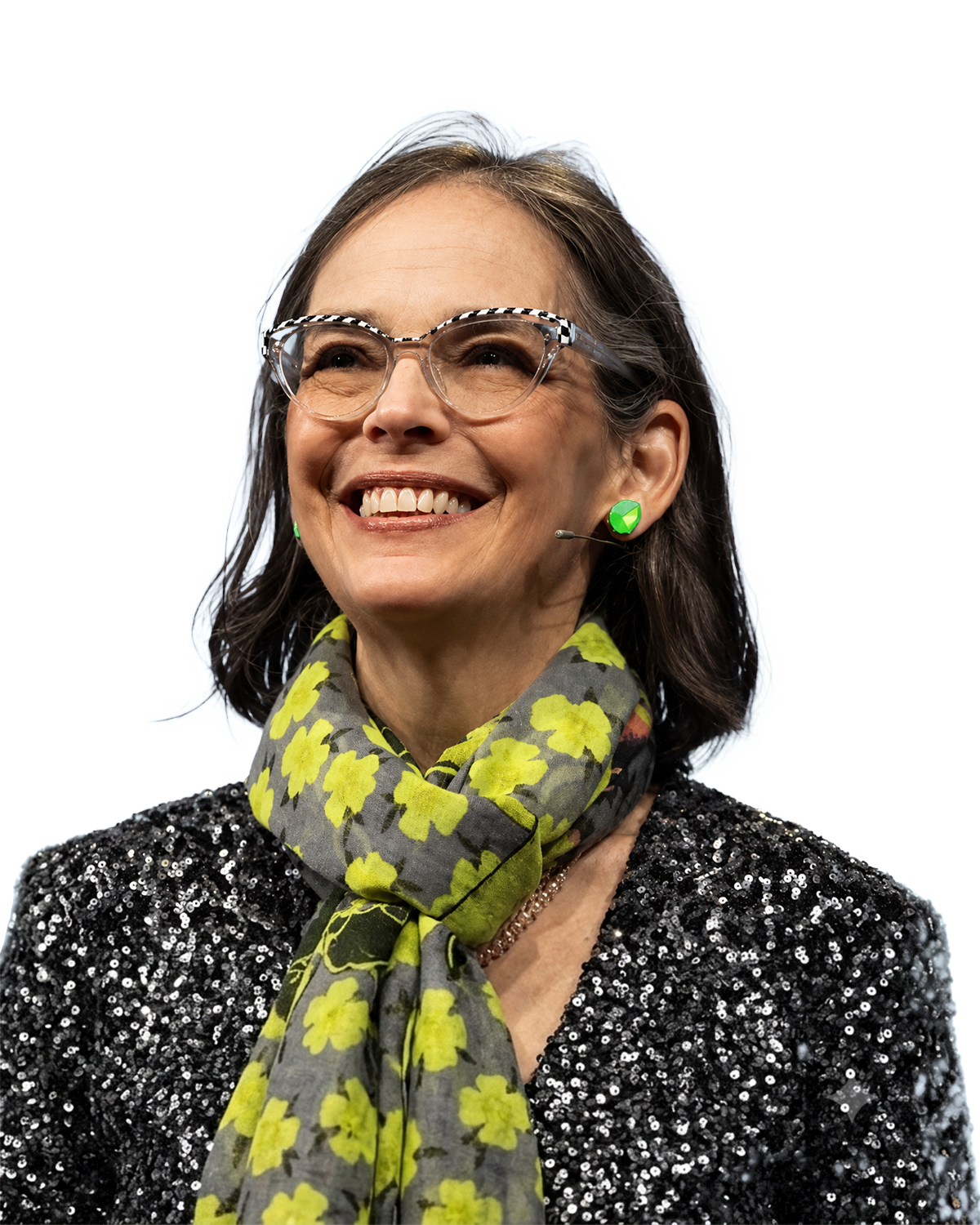
Lenore Skenazy

Lenore Skenazy

Founder, Free-Range Kids · President, Let Grow

Lenore Skenazy is an author and safe-childhood advocate who co-founded Let Grow with psychologists Jonathan Haidt and Peter Gray. In 2008 she let her nine year old ride the New York City subway home alone, wrote a column about it, and within two days was defending herself on national television as America's Worst Mom.

Her work makes the case that childhood independence, not constant supervision, is what builds resilient adults. Through Let Grow she runs free school programs and has helped pass Reasonable Childhood Independence laws in a growing number of states.


Transcript
00:00 America's Worst Mom
Ryan Vet · Welcome to another episode of the Ryan Vet Show. I am so excited to have America's Worst Mom, but I don't agree with that moniker. This is Lenore Skenazy, and she has spent the last 17 years really trying to help talk about kids. You might know her from her TED Talk, or her book Free-Range Kids, which came out in 2009 and was re-released in 2021. Lenore, thanks for being here.
Ryan Vet · I know you're doing so much, from lobbying and legislating to providing programs and resources for schools. I want to get into all of that, but first we have to go to the origin story. You sent your nine-year-old son on a subway by himself in New York City. Is that true?
Lenore Skenazy · That's true, but did I send him? He had been bugging me and my husband to take him someplace he'd never been before and let him find his own way home by subway. We're always on the subway. They don't smell great, but they strike us as pretty safe, and six million people take them a day. So we said yes.
Lenore Skenazy · One day I took him to Bloomingdale's, a fancy department store, and I left him there, after telling him that was going to happen. I went home one way and he took the subway home. He came into the apartment levitating with pride, with excitement, with happiness. So I wrote a column, why I let my nine-year-old ride the subway alone, and two days later I was on the Today Show, MSNBC, Fox News, and NPR defending myself. That's how I got the America's Worst Mom nickname.
02:28 Where the fear came from
Ryan Vet · I'm sorry you got that nickname, but I think it has allowed your message to go much further, because you're talking about something countercultural in America. For whatever reason, here we have this innate fear that our children are going to be abducted. We were talking before we started about ice cream trucks, and how now every ice cream truck is a bad guy. Could you talk about where some of these fears stem from?
Lenore Skenazy · I really do have to lay the blame for a lot of our fear at the feet of the media, because something changed in the 1980s. One thing is we got cable television, which gave us the 24-hour news cycle. When you have 24 hours of bad news in the background of your life, it seems like bad things are happening all the time, close to you.
Lenore Skenazy · There were also a couple of very high-profile kidnappings. One was Adam Walsh, whose dad, John Walsh, started America's Most Wanted. When they saw the ratings, television executives said, let's get more of them. Then along came Law and Order, which will never end. And the last thing that made a giant impact in the 80s was the kids on the milk cartons.
Ryan Vet · I caught the very tail end of that.
Lenore Skenazy · These were kids' pictures printed on milk cartons under a banner that said missing, or have you seen me. What they were missing was a little asterisk that would have said, I was taken in a custodial dispute between my divorced parents, or I ran away. The vast majority of missing kids are gone because of those circumstances, not because they were taken by a stranger. And here's my favorite fact: if for some reason you wanted your child to be kidnapped by a stranger, do you know how long you would have to leave that kid outside, unattended, for it to be statistically likely to happen?
05:36 750,000 years: the real odds
Ryan Vet · I've watched your TED Talk, so I believe it's something like 700,000. Is that right?
Lenore Skenazy · You're getting there. It's 750,000 years. That's so incomprehensible, but I love that statistic, because it is very hard to stay sane in a culture that keeps saying that your kids are in constant danger.
Lenore Skenazy · And that's where our culture has gone. So you ask, why are kids not outside? Why do we not let them go to the ice cream truck? It's because we've become convinced that anytime we take our eyes off our kids, they're going to be kidnapped, or fall behind. We've turned childhood from a time of running around, climbing trees, and making forts into a time of intense cultivation. And that's done out of love. We want the best for our kids.
07:04 Why overprotection breeds anxiety
Lenore Skenazy · But the ironic thing is that too much safety, like almost too much anything, can backfire. Whatever risk there is for letting your kid walk to the bus stop or play at the park, there's a risk of not letting them do that, and them thinking it's all too dangerous or that they can't handle it. And we call that anxiety.
Lenore Skenazy · Anxiety is when you think that you can't handle something. If you try you will fail, and if you fail you will never recover. And that's sort of what we've told kids about everything. There's a University of Michigan study: 50% of parents of kids aged nine to eleven don't let them go to another aisle at the store.
Ryan Vet · Fifty percent of kids that are nine to eleven, so we're talking fourth, fifth, maybe even sixth graders.
Lenore Skenazy · Are not allowed to go to another aisle. And the study was at the store, so maybe we're talking about somewhere as big as IKEA.
08:13 The glares parents face
Ryan Vet · Even one aisle over, that's startling. I'll share a story. We were at a fast food restaurant celebrating something my son had accomplished. At the time I had a six-year-old and a three-and-a-half-year-old. The six-year-old, twenty feet away and in full line of sight, wanted to exchange his toy for ice cream, and I remember the glares when we let him walk there. A couple of minutes later, our three-and-a-half-year-old wanted his chicken sandwich cut, so we told him to go get a plastic knife, and an employee just stared at us. Why do you think this is still sticking?
Lenore Skenazy · Part of it is social. Nobody wants to be glared at, or considered lazy or negligent. If the social norm around you is that nobody sends a six-year-old twenty feet to get an ice cream, then you don't do it either. But there's no better sentence in the world than, I did it myself. To take that out of kids' lives might seem like the socially responsible thing to do, but psychologically it undermines them.
Lenore Skenazy · I founded Let Grow, the nonprofit that promotes childhood independence, with three people, two of them psychologists. One is Jonathan Haidt, who wrote The Anxious Generation. The other is Peter Gray, a professor of psychology at Boston College. He wrote a piece in the Journal of Pediatrics showing that over the decades, as kids' independence has gone down, their anxiety and depression have gone up. And he makes the case that it isn't a coincidence, it's causation.
Lenore Skenazy · The reason is something called the internal locus of control. Have you heard of that expression?
11:20 Internal vs external locus of control
Ryan Vet · I have, yes.
Lenore Skenazy · It's the feeling of, I can handle things. Internally, I know I can control my destiny somewhat. I can go get that ice cream. An external locus of control is when somebody else is always telling you what to do. We know how much micromanagement drives people crazy, and to a certain extent we're micromanaging kids' lives. You start to feel like you can't handle anything, and a little bit like a victim.
Lenore Skenazy · I was just reading that there's an article in Parents Magazine, which has been my whipping boy for 20 years, on why you shouldn't overprotect your kids. This is the magazine that ran four pages on how to have a safe day at the park. For decades they've been alarmist, and now they have an article on why you shouldn't overprotect your kids.
Lenore Skenazy · The article was about how, when you do too much for your kids that they could do themselves, you rob them of the chance to learn those skills, to see that you believe in them, and to build that internal locus of control. So maybe we're starting to tip the balance. I'm not saying we're losing, but we could use a little help.
Ryan Vet · That's encouraging. I'm going to have to read that article.
Lenore Skenazy · A lot of it went down the memory hole. Did we ever say that? No.
13:57 Backpack leashes and college
Ryan Vet · I'm sure some of it was influenced by the stroller and sunscreen brands advertising. But one thing that irks me, and I see it less than I used to, is the backpack leashes, kids on a physical leash in an airport. Have you seen those?
Lenore Skenazy · I have. For some reason they don't get my goat the way other modern parenting things do. They're not going to be on the rope at college. Although I did hear about one college where they were on the rope. There was a story about Wesleyan, where supposedly when the student council walks around campus together, they all hold on to a rope.
Ryan Vet · That has deeper unpacking for sure.
Lenore Skenazy · Maybe that was a joke that got repeated seriously, we'd have to look into it. But what I'm hearing about college is really sad. You go to college for the dining hall, that's where you make friends and learn to argue and open your mind. Increasingly, kids scurry in, grab their food, and eat in their rooms. The point of college is to become expansive, and if you've been told everything is dangerous, and that whenever you're uncomfortable you're literally unsafe, you won't be open to the world.
16:14 Primals: the world you teach
Ryan Vet · I have not heard of primals.
Lenore Skenazy · Primals are a worldview. There are roughly two. One teaches your kids it's a dog-eat-dog world, don't be a patsy, you'll be taken advantage of. The other is that most people are nice, you can trust most people, and if you're lost you can go up to almost anyone. Both come from a place of love, either way you want your kid to thrive.
Lenore Skenazy · But there was a long-term study of kids brought up one way or the other, into adulthood and middle age. The findings for the kids raised with the mean-world primals were grim. They did worse on almost every measure: worse health, worse marriages and relationships, earning less and doing worse in their jobs. So this cultural norm we've reached doesn't help the kids we're trying to protect.
18:02 College and the isolation trend
Ryan Vet · You brought up two things I want to come back to. We have a guest coming up who leads one of the most awarded colleges for student experience, and has been in the role for decades. One thing they mentioned is that some campuses now have robots deliver food from the dining halls, or students use Uber Eats. This university hasn't allowed it, but it's a trend across campuses.
Lenore Skenazy · Are we allowed to hear the name of the university, or is that revealed in a later episode?
Ryan Vet · To be revealed in an upcoming episode. But it's fascinating. Colleges that were once a growing space are now allowing this isolation, and then we wonder why students are lonely. I also want to go back to the leash idea. If you look at how the generational pendulum swings, baby boomers worked hard to provide for their kids, but that created latchkey kids. The latchkey kids became helicopter parents, cultivating every area of life. Now I'm seeing a new trend, a digital or virtual leash, things like Life 360. We're giving the illusion of freedom. Is that better than no freedom, or worse, because they're always being watched?
20:23 Faith versus certainty
Lenore Skenazy · You're stepping into the thing I think about the most and talk about the least, because something like 86% of children are tracked now, and I don't think that's going to change. The whole idea of Life 360 is that you never have to worry about your child again, because anytime you're worried you can pull out your phone and check. That's supposed to give you peace of mind.
Lenore Skenazy · But that's not peace of mind. It's like OCD. You walk ten feet from your house, wait, did I lock the door? You go back and check. Then you walk again, did I lock the door? That is not peace of mind, that's accommodating your anxiety, which goes unchecked. The only way you actually get peace of mind is when you trust. When you learn to deal with that uncertainty, the discomfort goes down. That's exposure therapy. To keep checking feeds the anxiety.
Lenore Skenazy · When I was a kid there were no tracking devices, and five-year-olds walked to school. My mom would say goodbye in the morning and off I'd walk. The crossing guard was also a child, because back then we trusted ten-year-olds to shepherd five-year-olds across the street. Then, hours later, I'd appear at home. My mom didn't spend those hours biting her nails, wondering if I was okay.
Lenore Skenazy · What she got used to doing was trusting my neighbors, my walk, my own smarts, her own parenting, the neighborhood, the school, the odds, maybe a higher power. All of that gave her faith. And we're replacing faith with certainty, and certainty is more tenuous, because you have to keep checking it.
Lenore Skenazy · So this culture is leaching faith out of parents in their kids, and out of kids in themselves, and then saying, we can bring you something better, an electronic tracker, or up-to-the-second reports on how your child is doing. It's a tsunami of information that actually makes you more anxious under the guise of giving you what you need.
Lenore Skenazy · That anxiety loop gets passed along to your kid. And I don't blame parents, because you live in a culture that has Life 360, cameras in the classroom, Class Dojo sending home a behavior report every day, and a school that won't let a kid off the bus unless you're standing at the stop.
25:29 Action breaks the fear
Lenore Skenazy · Parents are stuck in this culture of fear, fed all sorts of data points that make them worry, and then asked why they're so anxious. The only way to break out of that cycle is through action. So Let Grow tries to make it easy for parents to let go a little and have the dopamine hit of, look what my kid did. He walked home. She went to the restaurant bathroom without me. My kid organized a game at the park, just like I did.
Ryan Vet · Absolutely.
Lenore Skenazy · One free school program is the Let Grow Experience. It's a homework assignment. Once a month, kids go home and do something new on their own, with their parents' permission but without their parents. There's a list and a theme each month: do something in your community, with a friend, for your parents. Walk the dog, climb a tree, wash the car.
Lenore Skenazy · What we keep hearing is parents saying, I can't believe I didn't do this sooner. They sound like they're waking up from a coma. Independence is now being studied by psychologists as possible therapy for children with anxiety. We took it out of kids' lives, they drooped, and all you have to do is put it back. It's like a miracle vitamin that perks them right back up.
27:57 Reasonable Childhood Independence laws
Ryan Vet · I love what Let Grow is doing. Some of the fear comes from laws around neglect, and there have been tragic cases you could argue weren't neglect, just a kid being a kid and a parent having some trust. I know you're doing work around that. Could you talk about it?
Lenore Skenazy · At this point, 13 states, covering more than half the population, have passed what we call a Reasonable Childhood Independence law. It simply says that neglect is when you put your kid in serious and obvious danger, not just any time you take your eyes off them. It's usually passed with bipartisan sponsorship, often unanimously, because nobody wants to second-guess letting their kid walk to the store or stay home while you pick up the milk.
Lenore Skenazy · We have another three or four states considering these laws right now. If you go to letgrow.org and look under the states tab, you can see whether your state has passed one. Hopefully someday it will be a national law that just says independence is good for kids, and that parents know and love their children best. The idea of a caseworker knocking on your door because your child was reported climbing a tree has got to end.
30:32 How to start Let Grow
Ryan Vet · If a parent, educator, or policymaker is listening, what are the next steps to implement Let Grow in their school or community?
Lenore Skenazy · For schools, go to letgrow.org, click on the Let Grow Experience, and the materials are free: a letter to send home and a list of activities. We also have materials for a Let Grow Play Club, which Kevin Stinehart described to you, where mixed-age kids play outside with cardboard boxes and hula hoops while an adult sits in the corner with an EpiPen, just there for emergencies.
Lenore Skenazy · For individual parents, it's the same idea, and it's easier with somebody else, because if your kid goes to the park and nobody's there, that's boring. We have a four-week plan: getting to know the neighborhood, talking to people, organizing things. One activity on the list, to get kids used to talking to people, is to order fries from a human being, not a robot. And we have an independence kit with more suggestions.
Lenore Skenazy · If you're a legislator, click the state laws tab, and we have a toolkit for how to introduce this law in your state, with arguments and sample testimony.
33:09 Answering the skeptics
Ryan Vet · It's hard to be the only parent doing this, so find other parents, because more people are receptive than you'd think. I have two more questions. When someone pushes back on Let Grow, what's your counterargument to the biggest objection?
Lenore Skenazy · Usually I ask people to remember their own childhood, and they get this faraway look and remember how much fun they had. Then they say, but times have changed. And I agree, but in terms of crime they've changed for the better. Crime peaked around 1993 and has been going down since. I was just reading that the American homicide rate today is back to where it was 125 years ago, around 1900.
Lenore Skenazy · The other thing I'd say is that parents are very concerned about their kids' mental health, and the risk of not letting your kids do anything on their own is that the anxiety never abates. The only thing that changes anxiety is action. And I have a graph, a Harris poll, that asked kids ages eight to twelve how they'd like to spend free time with friends. The choices were free play, an organized activity run by an adult, or online.
Lenore Skenazy · There's a big line, a middle line, and a small line, like the three bears. Can you read which is biggest?
Ryan Vet · Free play.
Lenore Skenazy · Free play. The middle is organized activity, and the bottom is online. We keep worrying about kids living online, but they don't want to. They're there by default, not by desire. Their desire is to hang out with friends and just make something happen. So if you want mentally well kids, give them the free, unsupervised time they know in their hearts they need.
36:51 From anxiety to trust: Annie's story
Ryan Vet · That's powerful. I'd love to close with this: is there a story or a person where you've seen the transformation firsthand?
Lenore Skenazy · There's a mom in Connecticut named Annie. She was so nervous that when the doorbell rang, she'd tell her kids to get down on the floor, in case bullets came through the door. She admits it and laughs about it. She let her ten-year-old ride his bike up and down the block, and eventually he asked to go around the corner, where his friend was.
Lenore Skenazy · He got his buddy, and then another, and another. By summer there were ten kids. They called themselves a biker gang, all in their helmets. Then she sent me a picture from winter, below freezing. There weren't ten anymore, there were six, but they were still bound and determined.
Lenore Skenazy · This kid, who had been nervous and a little ADHD, now runs home, throws down his backpack, and runs outside to be with his buddies. His life is transformed, and so is hers, because now she doesn't lock the door, the kids are coming by all the time. That's going from anxiety to trust.
39:13 Where to find Lenore
Ryan Vet · I love that story. How can people get in touch with you and learn more, watch your TED Talk, buy your book?
Lenore Skenazy · Let Grow is where everything is concentrated. All the free materials, the stories, my blog, and your local laws are there. If you scroll to the very bottom, there's a tab for crime statistics with all the graphs, and I'm not making them up. People often get the name wrong and think it's Let It Go. It's Let Grow, L-E-T Grow, G-R-O-W dot org.
Ryan Vet · Thank you so much for being on the Ryan Vet Show. And to everyone listening, Inspire Forward.

Frequently asked
Who is Lenore Skenazy? +

She is the founder of Free-Range Kids and president of Let Grow, a nonprofit she co-founded with Jonathan Haidt and Peter Gray to make childhood independence normal again.

What does free-range parenting mean? +

It means giving children the independence to do age-appropriate things on their own, like walking to school or running an errand, so they build real-world competence and confidence.

Is it actually safe to give kids more independence? +

Skenazy argues the risk is far lower than most parents assume. A stereotypical stranger kidnapping is extraordinarily rare, and she makes the case that the greater risk is the anxiety that grows when a child is never trusted to do anything alone.

What are Reasonable Childhood Independence laws? +

They are state laws clarifying that parents can give kids reasonable independence without it being treated as neglect. They have passed in 13 states, usually with bipartisan support.


Resources mentioned
Books
Also mentioned
Full show notes

We convinced ourselves that childhood is more dangerous than ever, right as crime hit historic lows. Lenore Skenazy, founder of Free Range Kids and president of Let Grow, joins The Ryan Vet Show to explain why overprotection became the actual threat, and how to give kids their independence back.

In 2008, Lenore Skenazy let her nine year old ride the New York City subway home alone. He had begged for it. He made it back levitating with pride. She wrote a column about it, and within two days she was on the Today Show, MSNBC, Fox News, and NPR defending herself against the title that stuck: America’s Worst Mom. She turned that moment into Free Range Kids, and then into Let Grow, the nonprofit she co-founded with psychologists Jonathan Haidt and Peter Gray to make childhood independence normal and easy again.

In this conversation with host Ryan Vet, Lenore unpacks how American fear got so distorted. She traces the spike to the 1980s: the arrival of 24 hour cable news, a handful of high profile abductions, and missing kid photos on milk cartons that left out the context. The result is a culture where, by one University of Michigan finding she cites, half of parents of nine to eleven year olds will not let their child walk to a different aisle in a store. Meanwhile the data points the other way. Lenore cites figures putting the American homicide rate back to where it was around 1900, and notes that a genuine stranger kidnapping is so rare you would have to leave a child outside for hundreds of thousands of years for it to become statistically likely.

The cost of all that protection is not neutral. Drawing on Peter Gray’s work, Lenore argues that as children’s real world independence has declined over decades, anxiety and depression have climbed, because independence is how kids build an internal locus of control, the felt sense that they can handle things. Ryan connects this to his Generational Pendulum, from latchkey kids to helicopter parents to today’s digital leash. Lenore’s sharpest point lands on tracking apps: with around 86 percent of children now tracked, she argues we are replacing faith with certainty, and certainty is more fragile because you have to keep checking it.

The episode closes on what actually works. The only thing that changes anxiety, Lenore says, is action. She walks through Let Grow’s free programs, the Reasonable Childhood Independence laws now passed in 13 states, and a Harris finding that kids themselves rank free play first and time online last. They are there by default, not by desire.

In this episode:

The subway story that made Lenore America’s Worst Mom, and what her son actually learned that dayWhy American fear spiked in the 1980s: 24 hour cable news, high profile abductions, and the milk carton effectThe University of Michigan finding that half of parents of nine to eleven year olds will not let them go to a different aisle in a storeWhy a stranger kidnapping is statistically so rare, and the homicide rate’s return to roughly 1900 levelsInternal versus external locus of control, and how independence builds resiliencePeter Gray’s research linking the decades long decline in independence to rising anxiety and depressionThe tracking trap: why around 86 percent of kids are now monitored, and why certainty is more anxious than trustRyan’s Generational Pendulum: latchkey kids, helicopter parents, and the digital leashLet Grow’s free programs: the Let Grow Experience, the Let Grow Play Club, and the Independence KitThe 13 states that have passed Reasonable Childhood Independence laws, usually with bipartisan supportThe Harris finding that kids rank free play first and online last when choosing how to spend time with friendsReferenced in this episode:

Let Grow: letgrow.orgFree-Range Kids by Lenore Skenazy (2009, re-released 2021)Jonathan Haidt and Peter Gray, co-founders of Let GrowPeter Gray’s research on declining independence and rising youth anxietyThe Anxious Generation by Jonathan HaidtKevin Stinehart and the Let Grow Play Club (last week’s episode)Connect with Ryan Vet:

Website: ryanvet.comCOLLIDE Newsletter: ryanvet.com/collideLinkedIn: linkedin.com/in/ryanvetInstagram: instagram.com/ryancvetBook Ryan as a Keynote Speaker: ryanvet.com/generational-speakerSubscribe to The Ryan Vet Show on Apple Podcasts, Spotify, YouTube, and wherever you get your podcasts. The guest era continues every Monday at 6am ET. Next week: Weh’yee Barkon on the millennial digital nomad, work without borders, and what a location independent life really costs. The COLLIDE essay podcast continues every Thursday at 7am ET.

Send us Fan Mail

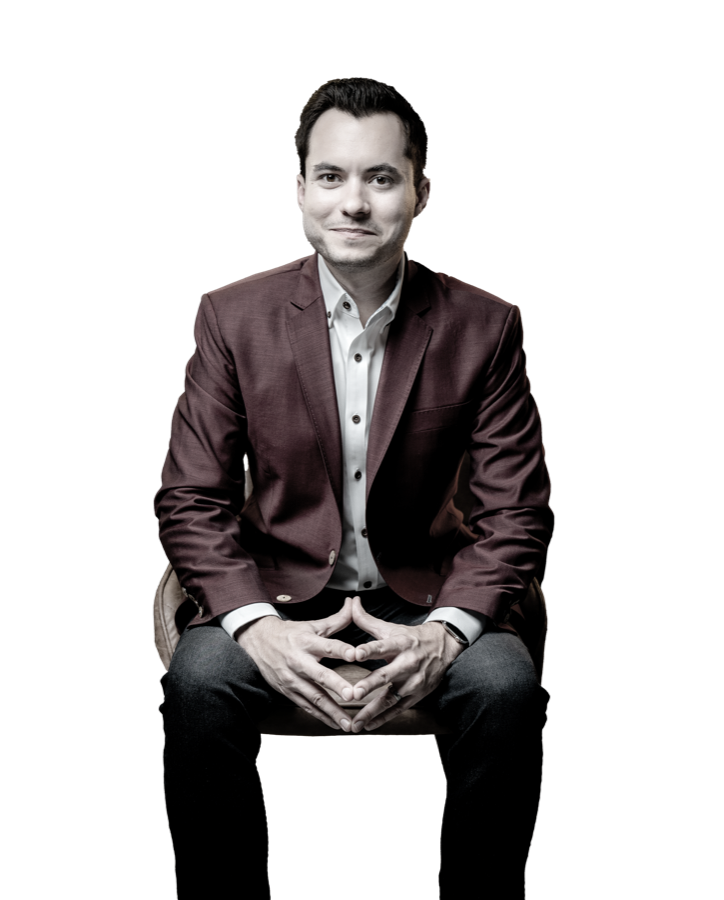
About Ryan VetRyan Vet is a USA TODAY bestselling author, futurist, and international keynote speaker whose insights on generations, culture, and the future of work have been featured in Forbes, Financial Times, ABC, NBC, and CBS. His research helps leaders understand emerging generational patterns and anticipate societal shifts before they fully unfold.

Join 20,000+ Leaders for Weekly InsightsIf you want deeper research and behind-the-scenes insights on generations and the future of culture and society, join Ryan’s weekly newsletter: 👉 https://ryanvet.com/collide
COLLIDE · A weekly essay by Ryan Vet

Read the thinking behind every episode.

Join 23,000+ leaders reading Every Tuesday at 4pm ET.

Free. Weekly. Unsubscribe anytime.
Ryan Vet