Hunt, Gather, Parent
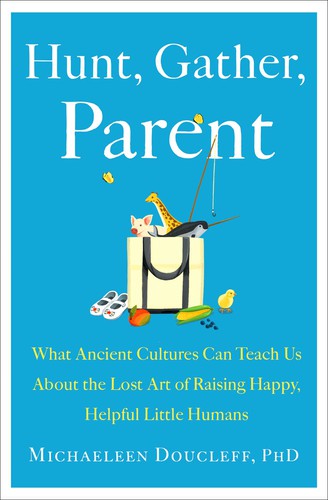
What Ancient Cultures Can Teach Us About the Lost Art of Raising Happy, Helpful Little Humans
Hunt, Gather, Parent by Michaeleen Doucleff (2021) — A health correspondent takes her toddler to live with Maya, Inuit, and Hadzabe families, and reports what those parents do that Western parents do not.
Reviewed by Ryan Vet · Last updated
What is Hunt, Gather, Parent about?
NPR science correspondent Michaeleen Doucleff travels with her toddler daughter to live with Maya, Inuit, and Hadzabe families and observes how those cultures raise cooperative, self-directed children. She contrasts those practices with mainstream Western parenting and distills a set of methods (organized around the acronym TEAM: Togetherness, Encouragement, Autonomy, Minimal Interference) for readers to try at home.
Is Hunt, Gather, Parent worth reading?
This is the parenting book that changed my behavior rather than my opinions, which is rarer than it sounds. The argument that lands is about control: helicopter parents exert too much, hands-off parents too little, and control is the thing kids actually need calibrated. Read it knowing the author has been a guest of mine.
Read it if…
- You suspect your parenting model is narrower than you think
- You want evidence drawn from outside the Western sample
- You are willing to change one habit rather than a philosophy
Skip it if…
- You want peer-reviewed rigor rather than reported narrative
- You have already read widely on non-Western child rearing
- You want the cause underneath the symptom
Ryan's take
Doucleff has been on my show, so weigh this accordingly. The idea that stuck was WEIRD: most psychology runs on Western subjects who live in boxes, which is why the line illusion fools us and not everyone. It changed what I do, not just what I think. I let my kids say yes to more things now. It still fixes a visible layer rather than the thing underneath it.
Where Ryan has discussed this book
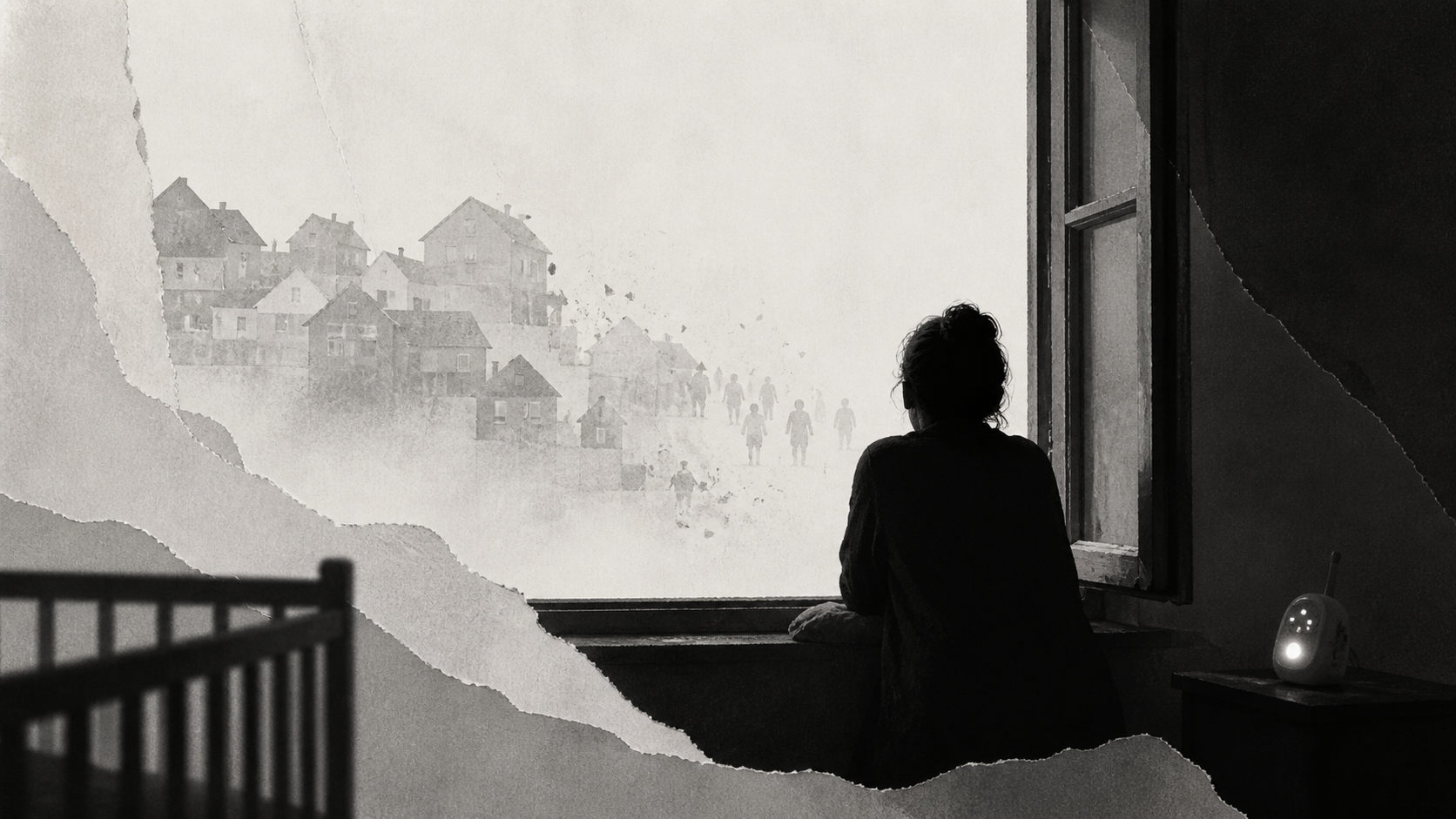
 The hardest part of modern motherhood isn't the work. It's that we now do it alone. The work was always going to be hard. The village was the part we could have kept. The Mothers Who Kept the Window Open: What We Lost When We Took Away the Village
Frequently asked questions about Hunt, Gather, Parent
What does WEIRD mean?
Western, Educated, Industrialized, Rich, Democratic. Doucleff's point is that the overwhelming majority of psychological research draws on that sample, so a whole other part of human experience never enters the data. It is not a small caveat. It is a reason to hold a lot of confident parenting advice loosely.
What is the boxes argument?
We live in boxes. Rooms, hallways, screens, cars. She connects that to the Muller-Lyer line illusion, the one with the arrows pointing in and out, where the lines are the same length but look different. People raised around straight corners fall for it. People who are not, largely do not. Our perception is built by the environment we were raised in, and ours is unusually rectangular.
What is the keyhole problem?
Doucleff argues that Western and specifically American parents work from one narrow model and treat it as the whole of parenting. She likens it to looking through a keyhole. You are seeing something real. You are just seeing a fraction of it and calling it the room.
Did it change anything for you?
Yes. After reading it and having her on the show, I have tried to let my kids say yes to more things, especially things that might not have a great outcome but are never going to harm them. That is a small change in wording and a large change in practice.
Is the author a friend or a guest?
She has been a guest on my show. That is worth saying plainly rather than burying under an affiliate disclaimer. It does not change what I think of the book, but you should know it before you weigh what I say about it.
Books like Hunt, Gather, Parent

Publication details
- Publisher
- Avid Reader Press
- Published
- 2021
- Pages
- 352
- ISBN-13
- 9781982149673